national geographic stunning science chemistry set instructions pdf
Summary
Lost your National Geographic chemistry set instructions? Find a downloadable PDF guide here & spark a love for science! Explore amazing experiments & learn cool chemistry.
National Geographic Stunning Science Chemistry Set Instructions PDF: A Comprehensive Guide
Unlock a universe of scientific discovery! This guide provides access to the official PDF instructions for the National Geographic chemistry set, featuring 45 experiments.
Embark on an exciting scientific journey with the National Geographic Stunning Science Chemistry Set! This meticulously designed kit isn’t just a collection of chemicals and equipment; it’s a gateway to understanding the fascinating world around us. Specifically crafted to ignite curiosity in young minds, the set offers over 100 engaging experiments, covering diverse areas like polymer chemistry, acid-base reactions, and the mesmerizing process of crystal growth.
Designed for budding scientists aged 8 and up, this kit promotes hands-on learning, transforming abstract concepts into tangible experiences. The included experiments aren’t merely about following instructions; they’re about fostering critical thinking, problem-solving skills, and a lifelong love for scientific exploration. Accessing the official PDF instructions is key to unlocking the full potential of this educational tool, ensuring safe and successful experimentation.
Target Age and Skill Level
The National Geographic Stunning Science Chemistry Set is optimally designed for children aged 8 to 12, though enthusiastic younger or older learners can also benefit with appropriate adult supervision. The experiments are structured to be accessible for beginners, requiring no prior chemistry knowledge. However, the kit also offers enough depth to challenge and engage those with some existing scientific interest.
While the set includes 45 easy-to-perform experiments, the complexity gradually increases, allowing children to build their skills and confidence. Adult guidance is recommended, particularly for younger children or experiments involving more intricate procedures. The PDF instructions provide clear, step-by-step guidance, making it easier for both children and adults to navigate the experiments safely and effectively, fostering a collaborative learning environment.
Safety Precautions and Guidelines
Prioritizing safety is paramount when conducting experiments with the National Geographic Chemistry Set. Always perform experiments under adult supervision, ensuring a responsible and secure learning environment. Wear appropriate eye protection – safety goggles are highly recommended – to shield against potential splashes. Conduct experiments in a well-ventilated area to avoid inhaling any fumes.
The included PDF instructions detail specific safety warnings for each experiment; carefully review these before starting. Never mix chemicals unless explicitly instructed, and avoid tasting or ingesting any substances. Familiarize yourself with proper chemical handling and disposal procedures. In case of spills, immediately clean them up following the guidelines provided in the manual, and report any incidents to an adult.
Understanding the Chemistry Set Components
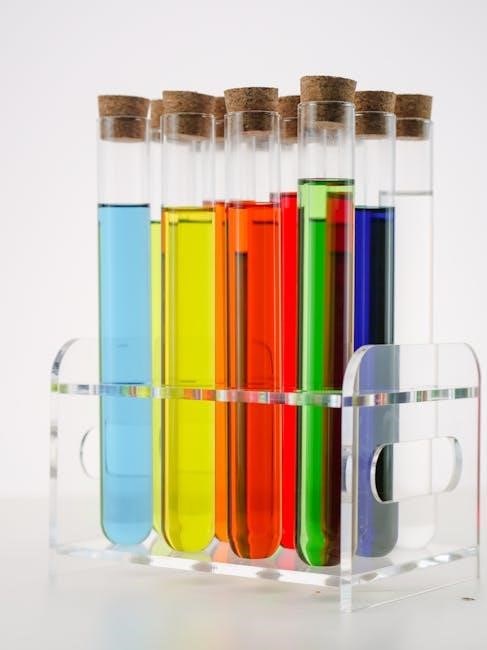
Explore the kit’s contents! This section details all included chemicals and lab equipment, helping you identify and organize materials for successful experiments.
List of Included Chemicals
The National Geographic Stunning Science Chemistry Set boasts a diverse array of chemicals designed for safe and engaging experimentation. Key components frequently include baking soda (sodium bicarbonate) and tartaric acid, utilized in creating exciting foaming reactions – a classic introductory experiment. Polymers are also central, allowing young scientists to explore the fascinating world of long-chain molecules and their unique properties.
Furthermore, the set often contains materials to investigate acid-base reactions, potentially including citric acid or similar compounds, alongside indicators to visually demonstrate pH changes. Chemicals supporting crystal growth experiments, like potassium alum, are also common. A complete, detailed list is, of course, provided within the official PDF instructions, ensuring accurate identification and safe handling of each substance. Always refer to the PDF for precise chemical names and quantities.
Overview of Lab Equipment
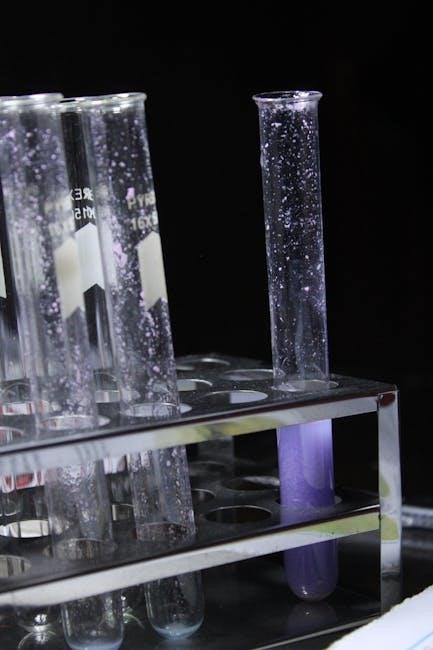
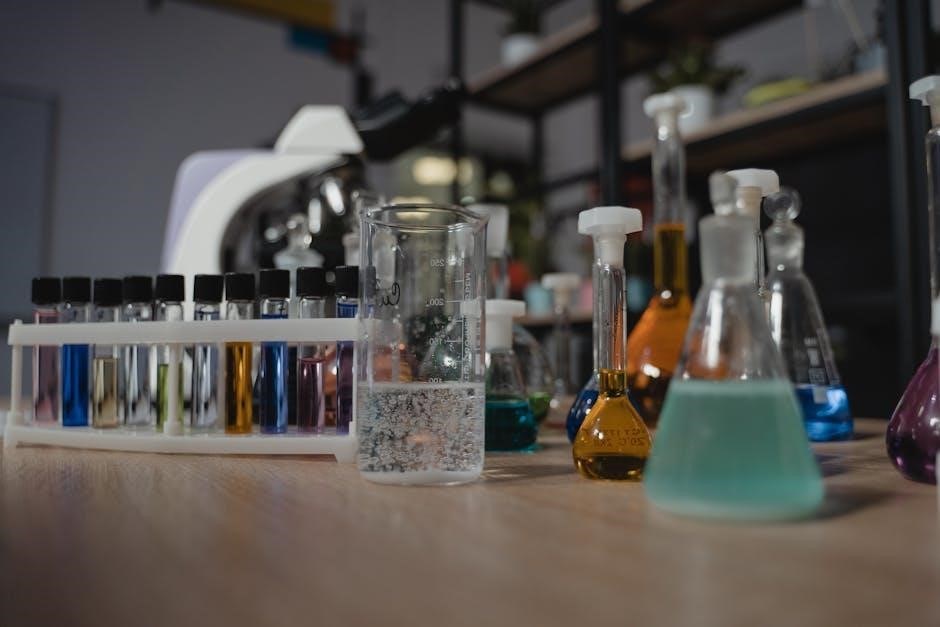
The National Geographic chemistry set provides budding scientists with essential lab equipment for conducting experiments safely and effectively. Expect to find a collection of plastic test tubes, crucial for mixing and observing chemical reactions in a controlled environment. Beakers, often in various sizes, are included for measuring and holding liquids. Droppers facilitate precise dispensing of chemicals, ensuring accurate experiment execution.
Safety goggles are a non-negotiable component, protecting young eyes during potentially splashy reactions. Stirring rods aid in mixing solutions, while a plastic funnel assists in transferring liquids without spills. The kit may also include small measuring spoons for accurate ingredient quantities. A comprehensive list, with detailed illustrations, is available within the official PDF instructions, guiding proper equipment usage and care.
Identifying and Organizing Materials
Before embarking on your chemical adventures, meticulous organization is key! The National Geographic chemistry set contains numerous chemicals and components, each clearly labeled; Carefully compare the contents against the inventory list within the official PDF instructions to ensure everything is present. Store chemicals in a cool, dry place, away from direct sunlight and heat sources.
Consider using small containers or resealable bags to pre-portion chemicals for specific experiments, streamlining the process and minimizing waste. A dedicated workspace, covered with protective material, is highly recommended. The PDF provides visual aids to help identify each substance, alongside crucial safety information. Proper organization not only enhances efficiency but also promotes a safe and responsible learning environment.
Experiment Categories & Overview
Explore diverse chemical realms! The set features experiments in polymer chemistry, acid-base reactions with indicators, and fascinating crystal growth – all detailed in the PDF.
Polymer Chemistry Experiments
Delve into the world of polymers – large molecules built from repeating subunits! The National Geographic chemistry set offers several engaging experiments focused on these fascinating materials. These experiments demonstrate how smaller molecules (monomers) link together to form long chains (polymers), creating substances with unique properties.
Expect to create slime, explore the properties of different polymer solutions, and observe how polymers react to various stimuli. The included PDF instructions provide step-by-step guidance, explaining the science behind each reaction. You’ll learn about cross-linking, viscosity, and the practical applications of polymers in everyday life, from plastics to adhesives. These hands-on activities make learning about polymer chemistry both fun and accessible for young scientists, fostering a deeper understanding of material science.
Acid-Base Reactions & Indicators
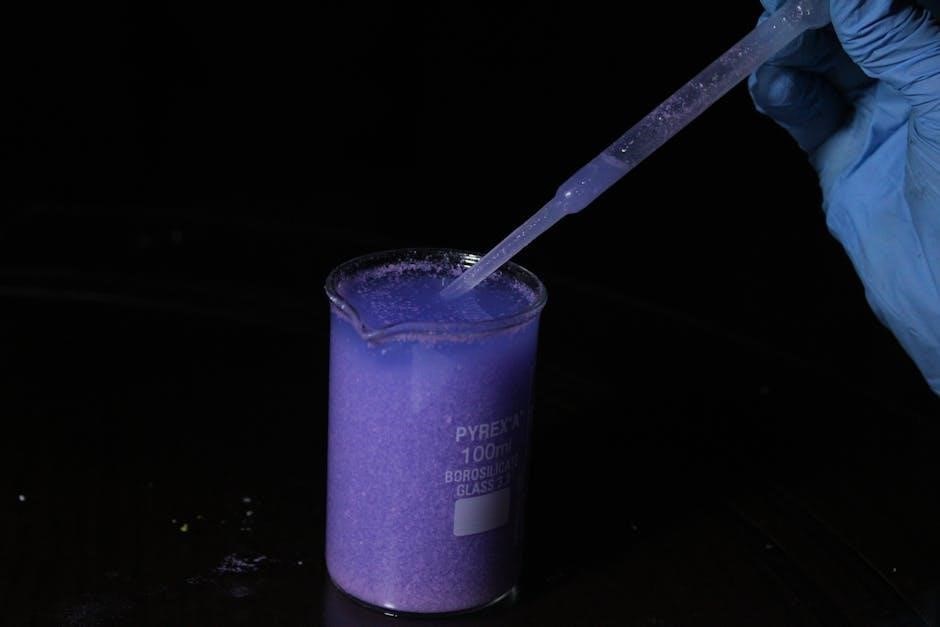
Explore the fascinating interactions between acids and bases with the National Geographic chemistry set! These experiments demonstrate how acids and bases neutralize each other, forming salts and water. The kit includes various indicators – substances that change color in response to pH changes – allowing you to visually observe these reactions.
The PDF instructions detail how to safely conduct experiments involving common household acids and bases, like baking soda and vinegar. You’ll learn about the pH scale, identifying acidic, basic, and neutral substances, and the importance of these reactions in everyday life. These hands-on activities provide a colorful and engaging introduction to fundamental chemical principles, fostering critical thinking and observation skills.
Crystal Growth Experiments
Witness the beauty of crystal formation with the National Geographic chemistry set’s dedicated experiments! These activities guide young scientists through the process of creating stunning crystals from various chemical compounds. The included PDF instructions provide detailed steps for preparing solutions, controlling temperature, and observing crystal growth over time.
Learn about saturation, supersaturation, and the factors influencing crystal size and shape. Experiments often involve creating crystals of different colors and structures, demonstrating the principles of solubility and crystallization. These hands-on experiences offer a captivating introduction to solid-state chemistry and the fascinating world of materials science, sparking curiosity and scientific inquiry.
Detailed Experiment Instructions (PDF Access)
Access the complete experiment guide! The official National Geographic chemistry set PDF provides step-by-step instructions for all 45 included experiments, ensuring success.
Locating the Official PDF Instructions
Finding the official PDF instructions for your National Geographic Stunning Science Chemistry Set is crucial for a safe and rewarding experience. Begin your search directly on the National Geographic website; typically, a dedicated support or product page for the chemistry set will host a downloadable version.
Ensure you are on the legitimate National Geographic domain to avoid potentially harmful or inaccurate instructions. Alternatively, authorized retailers, such as Amazon, often provide links to the official PDF within the product details section. Be cautious of third-party websites offering downloads, as these may contain outdated or compromised files. Prioritize downloading from trusted sources to guarantee the accuracy and safety of your experiments. A direct link is often the most reliable method.
Downloading from National Geographic Website
To download the official PDF instructions from the National Geographic website, navigate to their official online store or support section. Search for “Stunning Science Chemistry Set” using the site’s search bar. Locate the product page corresponding to your specific kit – ensuring it matches the set’s model number.
Scroll down the product page; a “Resources” or “Support” tab usually contains downloadable materials, including the instruction manual in PDF format. Click the PDF link to initiate the download. The file should open in a new tab or prompt you to save it to your device. Verify the file source is genuinely National Geographic before opening to ensure its authenticity and safety.
Authorized Retailer Links (Amazon)
Amazon serves as a convenient authorized retailer for accessing the National Geographic Stunning Science Chemistry Set instructions in PDF format. When purchasing the kit through Amazon, check the product details section; often, a direct link to the downloadable PDF manual is provided.
Alternatively, search “National Geographic Chemistry Set Instructions PDF” on Amazon. Legitimate listings will frequently include the PDF as a digital download upon purchase or offer a link to the official National Geographic website for retrieval. Exercise caution and verify the seller’s authenticity to avoid unauthorized or incomplete versions. Always prioritize downloading from verified sources to guarantee a safe and comprehensive guide.
Troubleshooting Common Experiment Issues
Encountering difficulties? This section addresses frequent problems like failed reactions, unexpected outcomes, and spills, ensuring a smooth and safe experimentation process.
Reaction Not Occurring
If your experiment isn’t producing the expected reaction, several factors could be at play. First, carefully re-examine the instructions to confirm you’ve used the correct amounts of each chemical – precision is key in chemistry! Ensure the chemicals are fresh and haven’t expired, as degradation can affect reactivity.
Secondly, verify the water temperature if the experiment requires a specific temperature; room temperature might not suffice. Also, confirm proper mixing – gentle stirring is often needed, but vigorous shaking could be detrimental. Check for contamination; even a small amount of an unintended substance can inhibit the reaction. Finally, remember that some reactions are slow; allow sufficient time for observable changes before concluding a failure.
Unexpected Results
Encountering results differing from the instructions isn’t necessarily an error, but a learning opportunity! Carefully observe all changes, even those not explicitly described. Variations can stem from slight differences in environmental conditions – temperature, humidity, or even the purity of water used.
Double-check your measurements; a small miscalculation can significantly alter outcomes. Consider if any unintended substances might have contaminated your materials. Document your observations meticulously – noting color changes, gas production, or texture alterations. Unexpected results often indicate a nuanced chemical interaction, prompting further investigation and deeper understanding of the scientific principles at work. Don’t discard anomalies; analyze them!
Chemical Spills & Cleanup
Safety is paramount! In the event of a spill, immediately alert a responsible adult. Never attempt cleanup alone. For minor spills of solid chemicals, carefully sweep them up and dispose of them according to the kit’s instructions – typically in a sealed container labeled for waste.
Liquid spills require absorption with paper towels; avoid spreading the substance. Rinse the affected area thoroughly with water. Crucially, avoid mixing different spilled chemicals, as this could create hazardous reactions. Always wear appropriate protection – gloves and eye protection – during cleanup. Consult the Material Safety Data Sheets (MSDS), if available, for specific chemical handling guidance.
Expanding Your Chemical Knowledge
Continue your scientific journey! Explore polymers, reactions, and fluorescence through further research and resources, building upon the kit’s foundational experiments.
Scientific Principles Explained
Delve deeper into the ‘why’ behind each experiment! The National Geographic chemistry set isn’t just about following steps; it’s about understanding the core scientific principles at play. Experiments involving polymers demonstrate how small molecules link to form larger chains, impacting material properties. Acid-base reactions showcase neutralization and pH changes, vital in many chemical processes.
Crystal growth illustrates solubility, saturation, and the formation of solid structures from solutions. Fluorescence experiments reveal how certain substances absorb and re-emit light. Understanding these concepts empowers young scientists to predict outcomes, troubleshoot issues, and apply their knowledge to new situations. The included manual, and supplemental resources, aim to explain these principles in an accessible and engaging manner, fostering a genuine appreciation for chemistry.
Further Resources for Young Scientists
Continue the learning journey beyond the kit! National Geographic encourages budding chemists to explore additional resources. Websites like Science Buddies offer a wealth of experiment ideas and scientific information. Educational videos on platforms like YouTube can visually demonstrate complex concepts. Libraries provide access to books on chemistry tailored for different age groups.
Consider joining a local science club or participating in science fairs to connect with peers and mentors. Online chemistry simulations allow for virtual experimentation, reinforcing understanding. The National Geographic website itself often features supplementary materials and articles. Remember, science is a continuous process of discovery – keep asking questions and exploring the world around you!