yale forklift owners manual
Summary
Need a Yale forklift owner’s manual? Water Boosting Systems has the resources to get you back to work quickly! Download or view manuals easily. **Yale Forklift Manuals** are here!
Yale Forklift Owners Manual: A Comprehensive Guide
Yale forklifts, with a history exceeding 137 years, demand proper maintenance. This guide details accessing official manuals, ensuring reliable operation and maximizing equipment lifespan;
Yale Materials Handling boasts a remarkable legacy, originating in 1844 as a lock manufacturer before pioneering forklift technology in the early 20th century. Today, Yale stands as a global leader, renowned for durable and efficient material handling equipment. Their commitment to innovation spans over a century, consistently delivering reliable solutions for diverse industrial needs.
Understanding your Yale forklift is paramount for safe and productive operation. This begins with familiarizing yourself with the specific features and functionalities detailed in the official owner’s manual. These manuals aren’t merely guides; they are essential resources for maximizing performance, preventing costly repairs, and ensuring operator safety. Yale’s long-standing reputation is built on quality, and accessing the correct documentation is key to upholding that standard.
Whether you operate a classic model or a recent innovation, a comprehensive understanding of your forklift’s systems is crucial. This introduction sets the stage for a deeper dive into the resources available to Yale forklift owners.
Historical Overview of Yale Materials Handling
Yale’s journey began in 1844, not with forklifts, but with high-security locks – a foundation built on engineering precision. The pivotal shift occurred in 1920 with the introduction of low-lift platform trucks, marking Yale’s entry into material handling. Just three years later, in 1923, Yale unveiled a groundbreaking electric-powered forklift, a testament to their forward-thinking approach;
Throughout the late 1920s, Yale continued to refine its designs, solidifying its position as an innovator. This early commitment to both internal combustion and electric power solutions demonstrates a versatility that continues today. Over the decades, Yale has consistently adapted to evolving industry demands, integrating cutting-edge technologies and prioritizing operator safety;
This rich history informs the detailed documentation available in Yale forklift owner’s manuals. Understanding this legacy underscores the importance of utilizing official resources for maintaining these sophisticated machines, ensuring continued performance and reliability.
Why Use an Official Yale Forklift Owners Manual?
Official Yale forklift manuals are crucial for maximizing your investment and ensuring operational safety. Unlike generic guides, these documents are specifically tailored to your forklift’s model and year, providing accurate information for maintenance, troubleshooting, and repair. Utilizing an OEM (Original Equipment Manufacturer) manual guarantees compatibility and avoids potentially damaging errors from incorrect procedures.
These manuals detail critical safety precautions, proper operating techniques, and comprehensive maintenance schedules. Access to accurate electrical wiring diagrams and fault code definitions (DTCs) streamlines diagnostics, minimizing downtime. Furthermore, adherence to Yale’s recommended practices extends the lifespan of your equipment and maintains its resale value.
Investing in an official manual isn’t just about repair; it’s about preventing issues, optimizing performance, and safeguarding your operators. It’s the definitive resource for responsible forklift ownership.
Understanding Yale Forklift Model Numbers (e.g., E535062, 3700LB)
Yale forklift model numbers are key to identifying the correct documentation and parts for your machine. Numbers like E535062 aren’t random; they contain vital information about the forklift’s specifications and features. The “E” typically denotes an electric model, while subsequent digits specify capacity, mast type, and other configurations.

Additionally, you’ll often see a capacity designation, such as 3700LB, indicating the maximum load the forklift can safely handle. These numbers are critical when searching for the appropriate owner’s or service manual. Using the correct model number ensures you’re accessing information specific to your forklift’s capabilities and components.
Incorrect identification can lead to using incompatible parts or following inaccurate maintenance procedures. Always verify the complete model number, including any serial numbers, for precise matching with available resources.
Locating Your Specific Yale Forklift Manual
Finding the correct Yale forklift manual begins with gathering key information: the model number (like E535062) and serial number of your machine. These identifiers are usually found on a data plate located on the forklift’s frame, often within the operator’s compartment or on the counterweight.
Once you have these numbers, several avenues are available. Start by checking with your local Yale dealership; they can often provide the appropriate manual directly. Online resources, such as specialized forklift manual websites (like ForkliftManuals.com), are also valuable. Remember to input the complete model and serial number for accurate results.
Be cautious of generic manuals, as they may not cover the specific features of your forklift. Prioritize official Yale documentation to ensure safety and proper maintenance procedures are followed. A thorough search using these identifiers will significantly increase your chances of success.
Downloading Yale Forklift Manuals in PDF Format
Obtaining Yale forklift manuals in PDF format offers convenience and accessibility. Numerous online platforms specialize in distributing these documents. However, verifying the source’s legitimacy is crucial to avoid corrupted or inaccurate files. Many dealerships now offer downloadable manuals directly from their websites, often requiring a model or serial number for verification.
Several websites compile forklift manuals, but exercise caution and check for user reviews or feedback regarding file quality. Ensure the PDF is complete and includes all necessary sections, such as safety precautions, operating instructions, and maintenance schedules. A reliable PDF manual should be searchable, allowing quick access to specific information.
Downloading from official Yale sources or reputable distributors guarantees the manual’s accuracy and completeness, safeguarding proper forklift operation and maintenance. Always scan downloaded files with antivirus software before opening.
Essential Sections of the Owners Manual
A comprehensive Yale forklift owner’s manual contains several vital sections. Safety precautions are paramount, detailing operational hazards and preventative measures. Operating instructions provide step-by-step guidance for safe and efficient forklift use, covering controls and functionalities.
Daily inspection checklists are crucial for identifying potential issues before operation, ensuring workplace safety. Routine maintenance schedules outline necessary servicing intervals, preserving forklift longevity and performance. Detailed electrical wiring diagrams are essential for troubleshooting and repairs, alongside explanations of fault codes (DTCs).
Load charts and capacity information are critical for preventing overloads and ensuring stability. The manual also typically includes information on operator training and certification requirements, emphasizing responsible forklift operation. Understanding these sections is key to maximizing the forklift’s lifespan and minimizing downtime.
Safety Precautions and Operating Instructions
Yale forklift operation demands strict adherence to safety protocols. The owner’s manual details critical precautions, including proper load handling techniques and awareness of surroundings. Always fasten seatbelts, and never exceed the forklift’s rated capacity, consulting the load chart.
Operating instructions cover pre-start checks, including fluid levels and tire condition. Mastering control functions – steering, lifting, tilting, and shifting – is essential for smooth and safe maneuvering. The manual emphasizes avoiding sudden stops and turns, particularly with elevated loads.
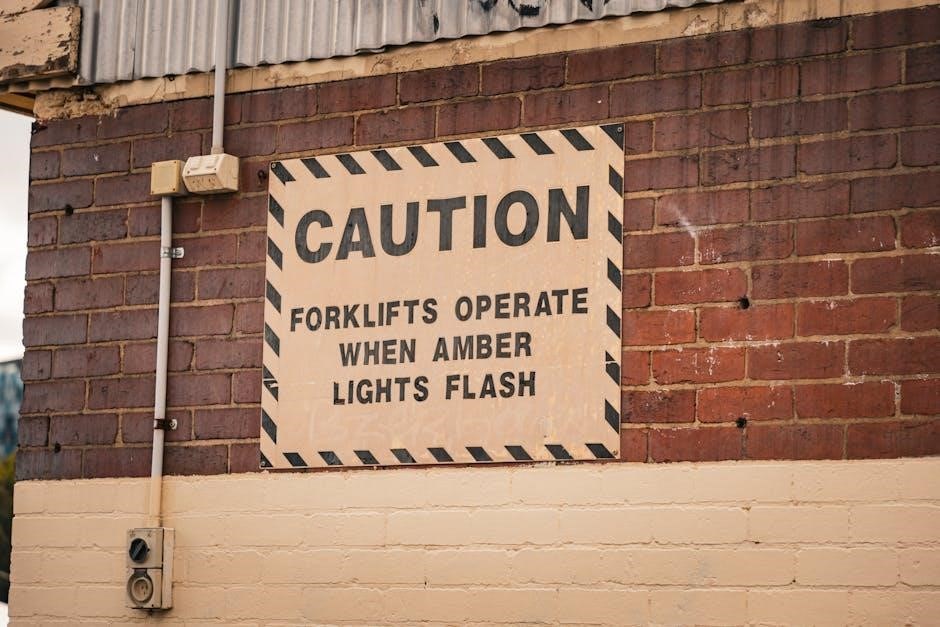
Pedestrian safety is paramount; operators must use the horn and maintain a safe distance. Proper shutdown procedures are also outlined, ensuring the forklift is left in a secure state. Ignoring these guidelines can lead to accidents, injuries, and equipment damage. Regular review of these sections is highly recommended.
Daily Inspection Checklist
Prior to each shift, a thorough daily inspection is crucial for Yale forklift safety and performance. The owner’s manual provides a detailed checklist, beginning with a visual examination for leaks – hydraulic fluid, coolant, or fuel. Tire condition, including pressure and wear, must be verified.
Operational checks include testing the horn, lights, brakes, and steering. Ensure the seatbelt is functional and properly secured. Inspect the forks for cracks or damage, and verify the mast’s smooth operation. Hydraulic hoses should be checked for wear and tear.
Fluid levels – engine oil, coolant, brake fluid, and hydraulic fluid – require regular monitoring and topping off as needed. Documenting these inspections helps track potential issues and ensures proactive maintenance, preventing costly repairs and downtime. A completed checklist confirms a safe operating condition.
Routine Maintenance Schedules
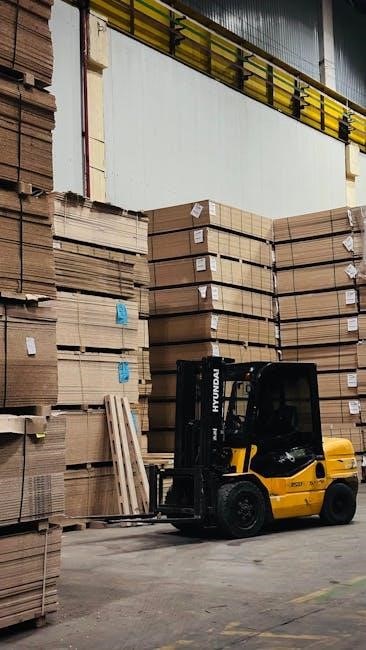
Yale forklift owners manuals detail comprehensive routine maintenance schedules, vital for longevity and optimal performance. These schedules are typically categorized by operating hours or calendar intervals – for example, every 250 hours or annually. Key tasks include oil and filter changes for the engine, transmission, and hydraulics.
Regular inspections of the cooling system, including radiator and hoses, are essential, alongside brake adjustments and inspections. Spark plugs (for gas models) require periodic replacement. Grease all lubrication points as specified to minimize wear and tear on moving parts.

More extensive servicing, such as transmission fluid flushes and thorough engine inspections, are scheduled less frequently. Adhering to these schedules, outlined in the manual, prevents breakdowns, reduces repair costs, and maintains the forklift’s resale value. Detailed records of all maintenance performed are highly recommended.
Understanding Yale Forklift Electrical Wiring Diagrams
Yale forklift owners manuals include detailed electrical wiring diagrams, crucial for diagnosing and repairing electrical issues. These diagrams illustrate the complex network of wires, connectors, and components powering the forklift’s systems – lights, controls, sensors, and the charging circuit.
Diagrams utilize standardized symbols representing different electrical components. Understanding these symbols is key to interpreting the diagrams correctly. Color coding of wires is also vital; the manual will provide a key to decipher the wire colors and their functions.
Troubleshooting electrical faults requires a systematic approach, starting with the battery and working through the circuit. A multimeter is essential for testing voltage and continuity. Always disconnect the battery before working on the electrical system to prevent shorts and potential hazards. Referencing the manual’s diagrams ensures accurate repairs.
Decoding Yale Forklift Fault Codes (DTCs)
Modern Yale forklifts employ sophisticated onboard diagnostic systems that generate Diagnostic Trouble Codes (DTCs) when malfunctions occur. These codes, detailed within the owner’s manual, provide valuable clues for pinpointing the source of the problem, significantly reducing troubleshooting time.
DTCs are typically alphanumeric, such as “E535062,” and correspond to specific system failures – engine, transmission, hydraulics, or electrical components. The manual provides a comprehensive list of these codes and their associated descriptions, explaining the nature of the fault.
Accessing DTCs usually involves a diagnostic scan tool connected to the forklift’s data port. After retrieving the code, consult the manual to understand the potential causes and recommended repair procedures. Ignoring DTCs can lead to further damage and costly repairs. Proper interpretation, guided by the manual, is essential for effective maintenance.
Troubleshooting Common Yale Forklift Issues
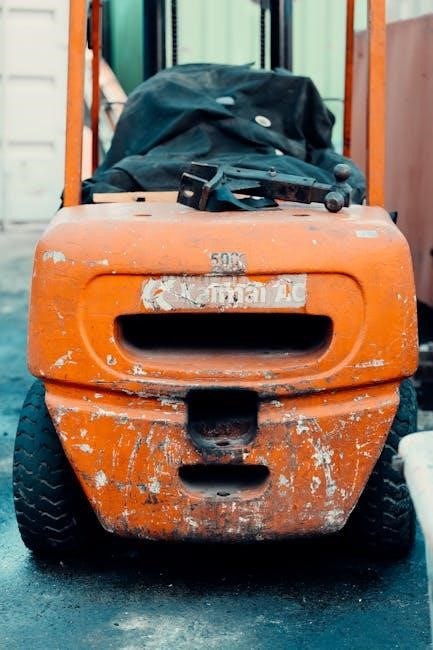
The Yale forklift owner’s manual is an invaluable resource for addressing frequent operational problems. Common issues, like starting difficulties, hydraulic system failures, or erratic movement, often have straightforward solutions outlined within its pages.
The manual’s troubleshooting section systematically guides users through diagnostic steps. It details potential causes for each symptom and provides clear instructions for inspection and repair. This empowers operators to resolve minor issues independently, minimizing downtime.
For example, a “no-start” condition might be traced to a discharged battery, faulty ignition switch, or fuel supply problem – all addressed with specific procedures in the manual. Remember to always prioritize safety and consult a qualified technician for complex repairs. Utilizing the manual’s guidance ensures efficient and safe problem resolution.
Yale Forklift Capacity and Load Charts
Your Yale forklift owner’s manual contains critical load capacity information, essential for safe and efficient operation. These charts detail the maximum weight a forklift can lift at various load centers – the distance from the forklift’s mast to the load’s center of gravity.
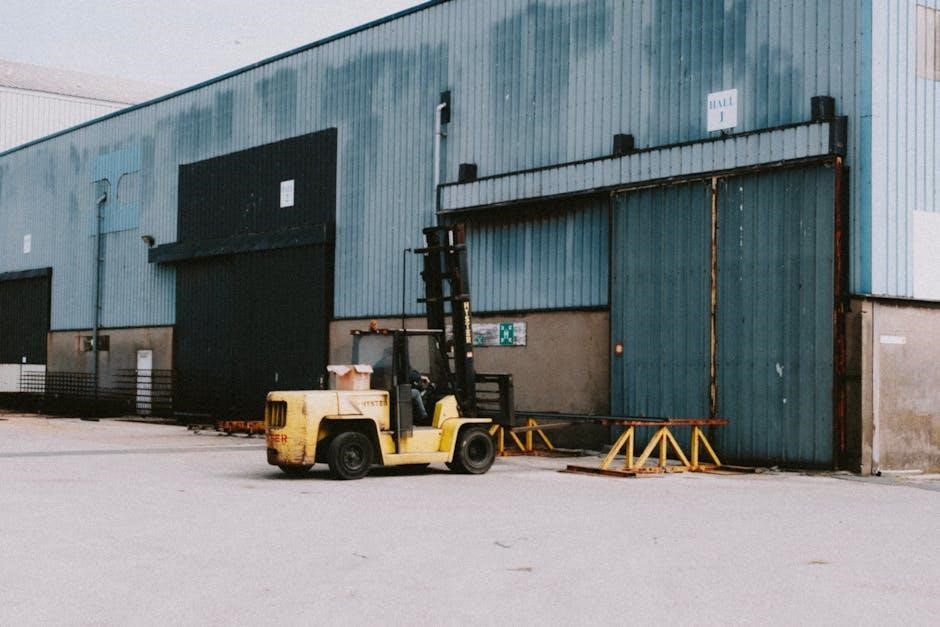
Understanding these charts is paramount to prevent instability and potential accidents. The manual will specify capacity reductions for different mast heights, attachment usage, and operating conditions. Ignoring these limits can lead to tipping or structural damage.
Always refer to the specific chart for your forklift model and configuration. The manual provides clear instructions on how to determine the load center and calculate the allowable load weight. Prioritizing adherence to these guidelines ensures operator safety and protects the forklift from overload damage.
Operator Training and Certification
The Yale forklift owner’s manual strongly emphasizes the necessity of comprehensive operator training and certification. Operating a forklift without proper training is dangerous and can lead to serious accidents, injuries, and property damage.
Formal training programs cover essential topics like forklift controls, stability principles, load handling techniques, and workplace safety regulations. Certification demonstrates that an operator has successfully completed a training course and possesses the knowledge and skills to operate a forklift safely.
Your manual will likely reference OSHA (Occupational Safety and Health Administration) standards regarding forklift operation. Regular refresher training is also crucial to reinforce safe practices and update operators on any new procedures or regulations. Prioritizing operator safety through training is a legal and ethical responsibility.
Where to Purchase Printed Yale Forklift Manuals
While digital Yale forklift manuals are readily available, some operators prefer the convenience of a physical copy. ForkliftManuals.com is frequently cited as a leading supplier of printed Yale materials, offering a large selection of operator manuals, service repair manuals, parts catalogs, and electrical wiring diagrams.
They specialize in factory original dealership construction manuals, ensuring accuracy and completeness. Other online retailers and industrial equipment suppliers may also stock printed Yale manuals, but verifying authenticity is crucial. Be cautious of unofficial sources offering potentially inaccurate or outdated information.
Prices for printed manuals vary depending on the model and type of manual. Consider the benefits of having a durable, readily accessible reference guide, especially in environments where electronic devices may be impractical or unreliable. Always confirm compatibility with your specific Yale forklift model.
Resources for Yale Forklift Parts and Service
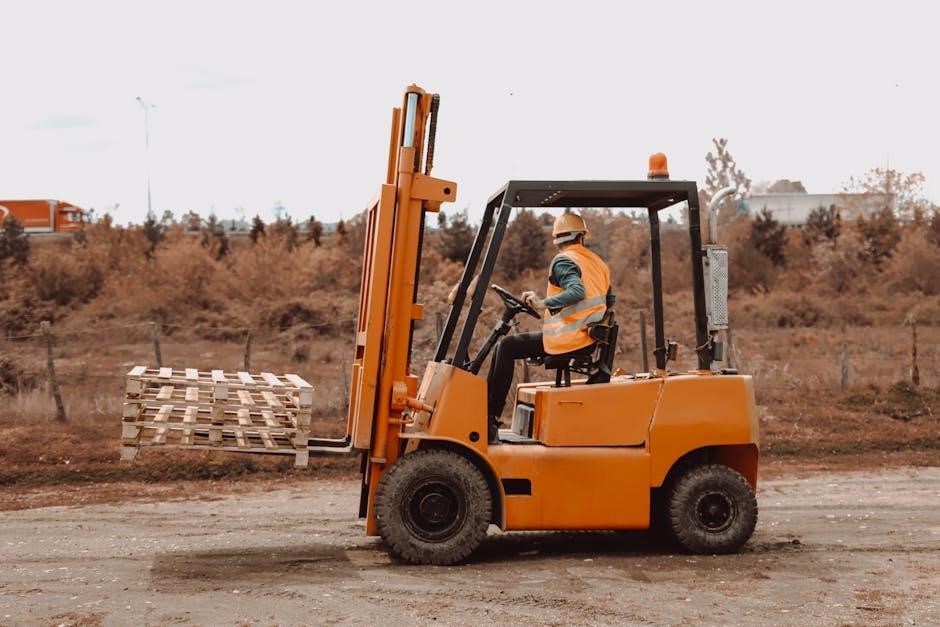
Maintaining your Yale forklift requires access to genuine parts and qualified service. Yale maintains a comprehensive network of authorized dealerships offering both. These dealerships provide expert technicians trained specifically on Yale equipment, ensuring accurate diagnostics and repairs.
For parts, Yale’s official channels guarantee compatibility and quality, crucial for maintaining performance and safety. Online parts retailers specializing in forklift components may also be an option, but verifying part numbers against your owner’s manual is essential.
Beyond dealerships, independent forklift repair services exist, but their expertise with Yale models can vary. Utilizing your owners manual to understand your forklift’s specific needs will help you communicate effectively with any service provider, ensuring optimal maintenance and longevity.
Yale Forklift Manuals for Specific Years (e.g., 2002 Models)
Yale forklift designs evolve, meaning manuals are often year-specific. Locating the correct manual for your forklift’s production year – like a 2002 model – is vital for accurate maintenance and repair procedures. Older models, such as the Yale 3700LB from 2002 (E535062, 5021352-05), may require searching dedicated online archives or contacting Yale directly.
Differences in components, wiring, and safety features necessitate using the manual tailored to your forklift’s year of manufacture. Generic manuals may contain inaccurate information, potentially leading to improper repairs or safety hazards.
PDF versions of older manuals are frequently available online, though verifying the source’s reliability is crucial. Yale’s official website and authorized dealerships are the most trustworthy sources for year-specific documentation.